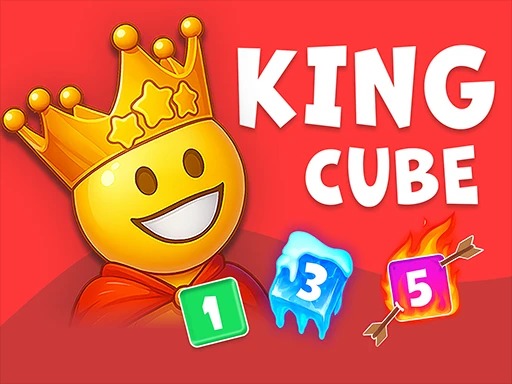
Cube King is a strategic puzzle game where smart planning matters more than fast reactions. Your goal is simple on the surface: connect cubes with the same numbers and keep the stacks from overflowing. But as more cubes enter the board every few seconds, the game quickly turns into a test of decision-making, timing, and risk control.
New cubes emerge from portals at the bottom and stack upward on rods. You move cubes between stacks to merge matching numbers, earn coins, and unlock powerful upgrades. Every action has consequences. One careless move can create an unmanageable stack and end your run. Cube King rewards players who think ahead and punish those who chase quick merges without a plan.
How to Play
In Cube King, cubes continuously appear on rods at fixed intervals. Your job is to move cubes between stacks so that cubes with the same number connect and merge into higher-value cubes.
Each merge earns you coins. These coins can be spent on upgrades that help you survive longer as the board becomes more crowded. The challenge grows steadily as stacks rise faster and bad boosts begin to appear.
The game ends immediately if any stack overflows, so managing height is just as important as merging numbers.
Tips & Strategies
1. Control stack height first, value second
High-number cubes are tempting, but keeping stacks low should always be your top priority. A safe board beats a powerful board.
2. Avoid spreading numbers too evenly
Leaving one cube of every value across different stacks makes future merges harder. Focus on building two matching cubes instead of many singles.
3. Spend coins early, not late
Early upgrades reduce pressure later. Increasing starting cube levels or unlocking portals early gives you more control when the game speeds up.
4. Watch the 15-second spawn rhythm
New cubes appear on a timer. Try to finish risky moves just before new cubes spawn so you have room to recover.
5. Treat boosts as situational tools
Good boosts can save a run, but bad ones can ruin it fast. Always leave at least one flexible stack to handle surprises.
6. Extinguish fire immediately when possible
Burning cubes slowly lose value, which can destroy carefully built merges. If you can afford it, remove fire effects early.
Most players lose in Cube King not because they run out of moves, but because they chase upgrades too aggressively. It feels smart to push for higher numbers quickly, but that mindset usually creates tall, unstable stacks. The biggest trap is upgrading cubes without considering where future cubes will land. Once stacks reach medium height, every move needs a backup plan.
Another common mistake is underestimating bad boosts. Fire Arrows seem manageable at first, but over time they silently undo progress by lowering cube values. Skilled players treat every divisible-by-5 cube with caution. Sometimes it is better to delay a merge than to trigger a risky boost at the wrong moment.
What separates good players from average ones is patience. Strong runs are built by keeping two or three stacks flexible at all times, even if it means ignoring a tempting merge. Cube King rewards restraint far more than greed.
Controls
Mouse / Touch Controls:
- Tap or click a cube to select it
- Tap or click another cube or stack to move the selected cube
Keyboard Controls:
- Not available
Cube King is fully playable using mouse clicks or touch gestures. No keyboard input is required.
Similar Games
If you enjoy Cube King, you may also like:
These games focus on merging mechanics, space management, and strategic decision-making.
FAQs
Is Cube King free to play?
Yes, Cube King is completely free to play in your browser.
Can I play Cube King on mobile?
Yes, the game supports touch controls and works smoothly on mobile devices.
How do I get more coins quickly?
Focus on consistent merges and avoid stack overflow. Surviving longer earns more coins than risky high-value merges.
Are boosts always helpful?
No. Some boosts can hurt your progress, especially Fire Arrows. Use them carefully.
What ends the game?
The game ends immediately when any stack overflows beyond its limit.